Taiwan-South Korea Chip Contest: Lai Administration Should Take the Offensive
China Times Editorial, July 2, 2026
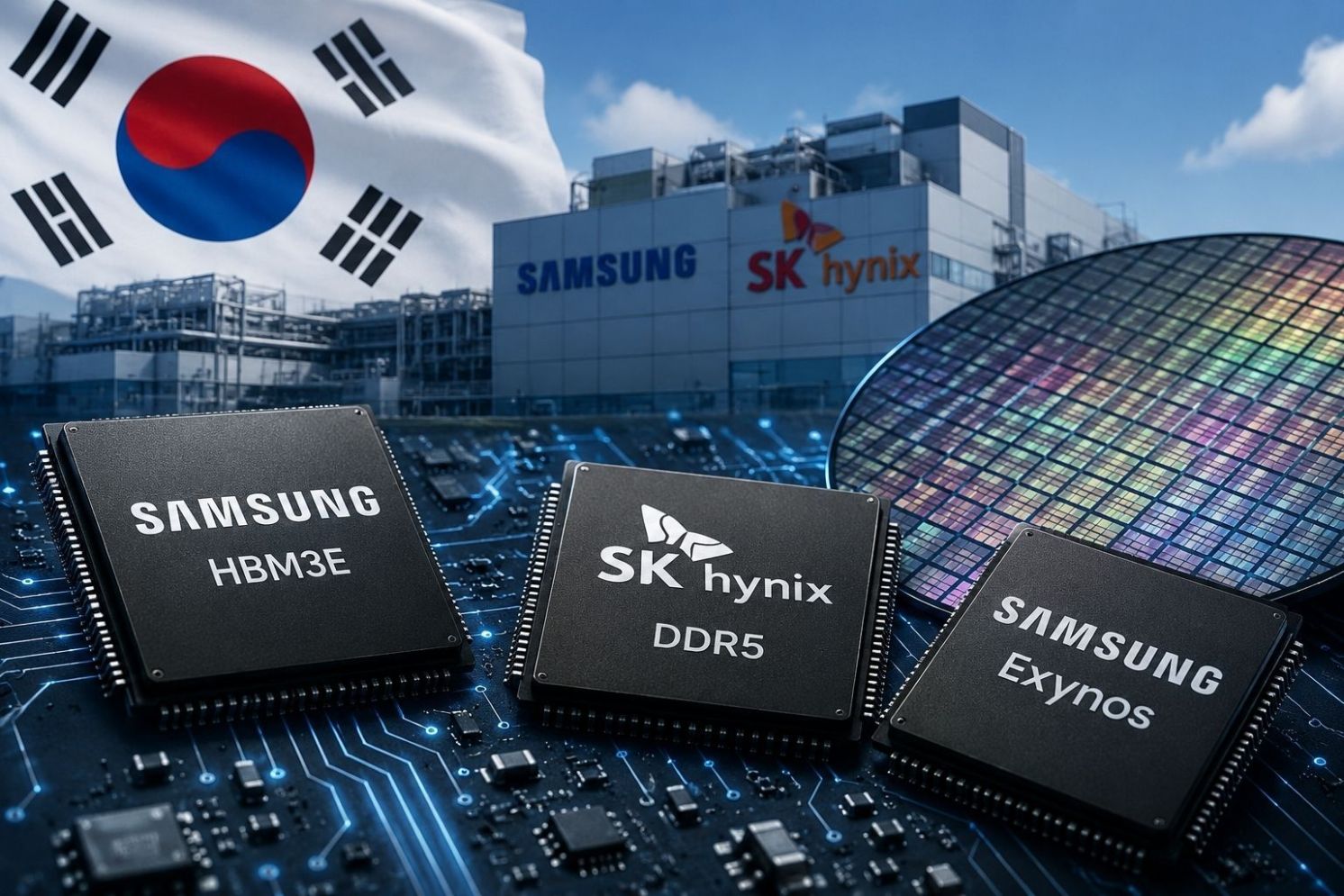
At the end of June, the South Korean government joined forces with Samsung and SK Hynix to announce three unprecedented mega-projects. Together, these initiatives will raise total public and private investment to nearly US$1.2 trillion, creating a brand-new semiconductor cluster outside the Seoul metropolitan area that will become the country's second-largest semiconductor hub. In addition, South Korea plans to invest one quadrillion won in expanding a massive AI data center, making an all-out bid to secure leadership in the age of artificial intelligence.
The strategic implications for Taiwan's semiconductor industry are significant. For years, Taiwan has led the world in foundry services and advanced process technologies, while playing a more specialized or mid-to-high-end role in memory products such as DRAM and NAND Flash. South Korea is now leveraging national resources to double its production capacity within five years, establishing an almost insurmountable barrier in both production scale and pricing in key battlegrounds such as High Bandwidth Memory (HBM) and high-capacity DDR5 memory, both of which are critical components for AI chips.
An even deeper challenge comes from the competition to dominate the AI ecosystem. Since the emergence of generative AI, success in the semiconductor industry has no longer depended solely on leadership in manufacturing processes. Instead, competition has evolved into a system-level contest integrating advanced manufacturing, advanced packaging, and high-bandwidth memory. Although the Taiwan Semiconductor Manufacturing Company (TSMC) maintains an overwhelming advantage in advanced process technology and CoWoS packaging, geopolitical pressures and regulatory requirements over the past two years have compelled the company to shift part of its production capacity and resources overseas by establishing facilities in the United States, Germany, Japan, and other countries. While this geographical diversification reduces Taiwan's political risks, it also dilutes the island's domestic research focus and engineering talent.
By contrast, South Korea has chosen to establish an entirely new semiconductor cluster within its own borders. Samsung and SK Hynix will keep all of their packaging centers in Cheonan and Onyang, while the government will fully finance essential infrastructure, including underground power transmission networks, water resources, and transportation systems. This strategy of consolidating national resources at home directly targets the potential gap in Taiwan's domestic semiconductor ecosystem resulting from TSMC's overseas expansion.
Faced with this enormous challenge in the AI era, the greatest concern within Taiwan's semiconductor industry is the striking disparity between the Taiwanese and South Korean governments in terms of commitment and strategic vision. Taiwan's current policies remain largely focused on tax incentives. Yet for an industry that consumes vast amounts of electricity and water, the government's investment in power grid resilience, renewable energy supply, and—perhaps most importantly—the cultivation of engineering talent, as well as its efficiency in cross-ministerial coordination, falls far short of South Korea's extraordinary pace.
The government's immediate priority should therefore shift from defensive tax incentives to proactive infrastructure development. It must confront the domestic research gap left by the overseas expansion of companies such as TSMC, accelerate the meaningful integration of a national AI chip and advanced packaging initiative, and respond to South Korea's strategy of dramatically expanding HBM and memory production. Taiwan should actively leverage its strengths in foundry manufacturing and advanced packaging to help domestic memory manufacturers and chip designers enter the next-generation AI supply chain, ensuring that they are not excluded from the core architecture of AI servers. At the same time, Taiwan must comprehensively address the industry's four fundamental challenges: water, electricity, land, and talent.
Overall, South Korea's trillion-dollar national gamble has elevated global semiconductor competition from a race between corporations over manufacturing technology to the ultimate contest between nations over strategic assets. In the era of artificial intelligence, Taiwan's traditional model—relying primarily on TSMC to compete independently while the government remains focused on defensive tax incentives—is no longer sufficient. Confronted by both the overseas migration of TSMC's production capacity and the gradual dilution of Taiwan's domestic resources, the government must recognize the semiconductor industry as a strategic sector vital to the nation's survival. Only by shifting its policies from defense to proactive offense can Taiwan firmly safeguard its irreplaceable position as the world's Silicon Island in this defining chip war of the century.
From: https://www.chinatimes.com/opinion/20260702004751-262101?chdtv